Visions of a New World: Revisiting Xul Solar’s Landscapes (1931–1954)
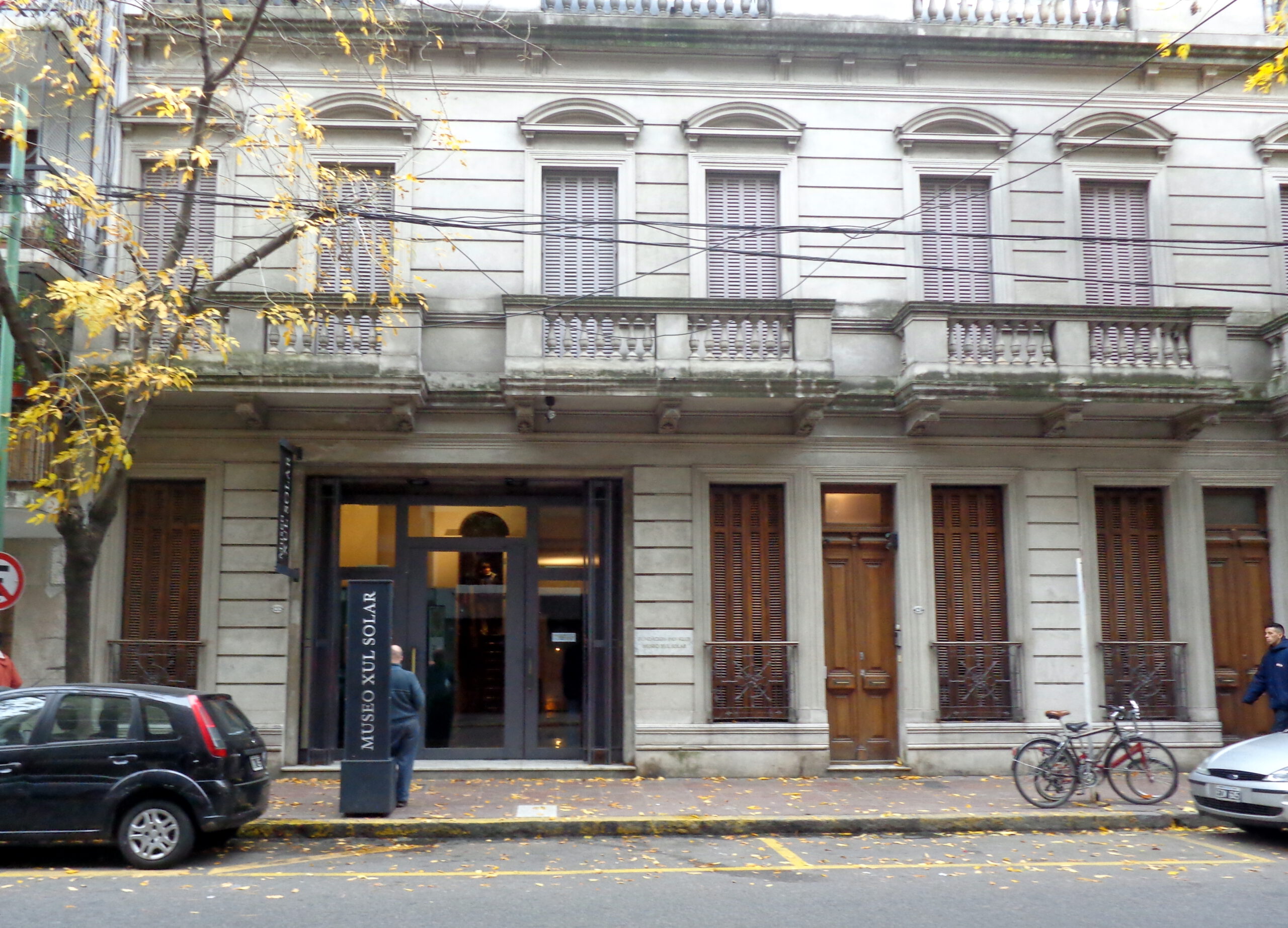
When I spent ten months in Buenos Aires back in 2001 on a DAAD scholarship – studying at the Universidad de Buenos Aires and working in the archives of the Museo Xul Solar – Fundación Pan Klub – I found myself completely drawn into the universe of Alejandro Xul Solar (1887–1963). Long before my current research turned to historical European lace and whitework, my art-historical curiosity belonged to this extraordinary Argentine painter, mystic, linguist, and self-described ‘re-inventor’.
More than twenty years after I submitted my Master’s thesis at the University of Regensburg in 2003, I am delighted that the study – Visionen einer Neuen Welt. Xul Solars Landschaften von 1931–1954 – is now permanently available in Open Access via ART-DOK at Heidelberg University Library. Written in German and accompanied by an English abstract, the work brings together primary sources, archival letters, and close visual analyses gathered in Buenos Aires that remain relatively hard to access in European scholarship. Making the text freely available online feels like a wonderful way to introduce Xul Solar’s visionary landscapes to a wider international readership.
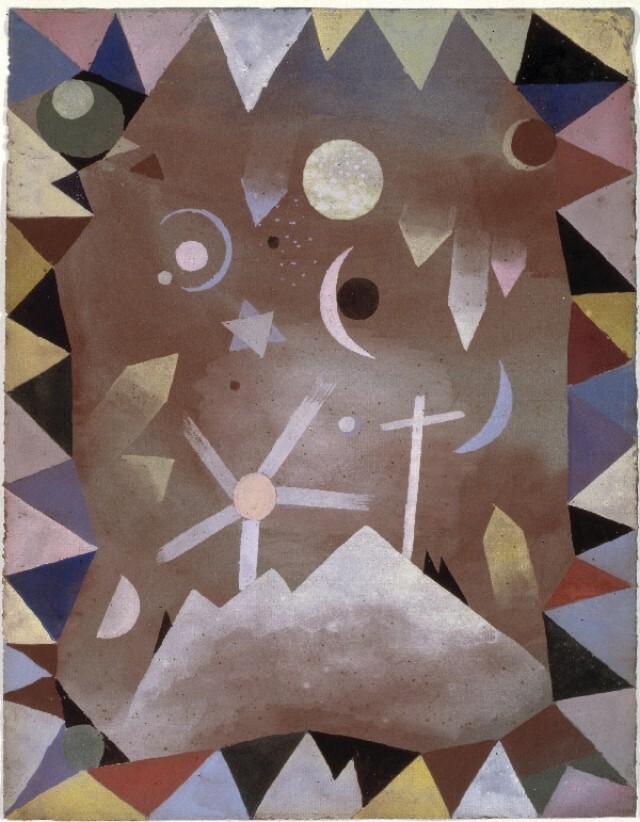
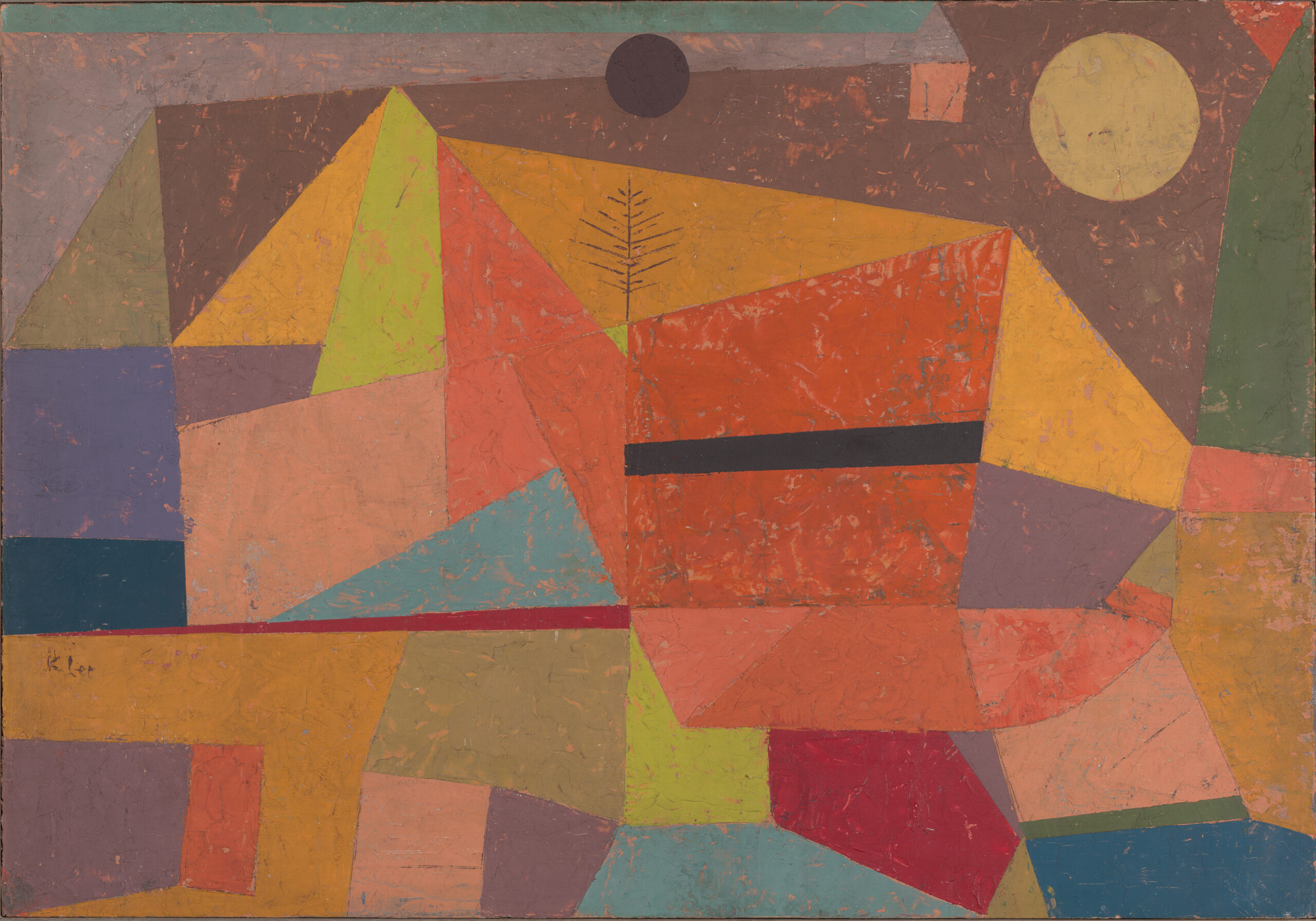
(Note: Due to strict copyright restrictions on Xul Solar’s estate, the online edition does not include the original plates – and for the same reason, I am illustrating this post with photographs of the artist and his museum in Buenos Aires, alongside two mountain landscapes by Paul Klee, whose work was among the European modernist impulses Xul absorbed.)
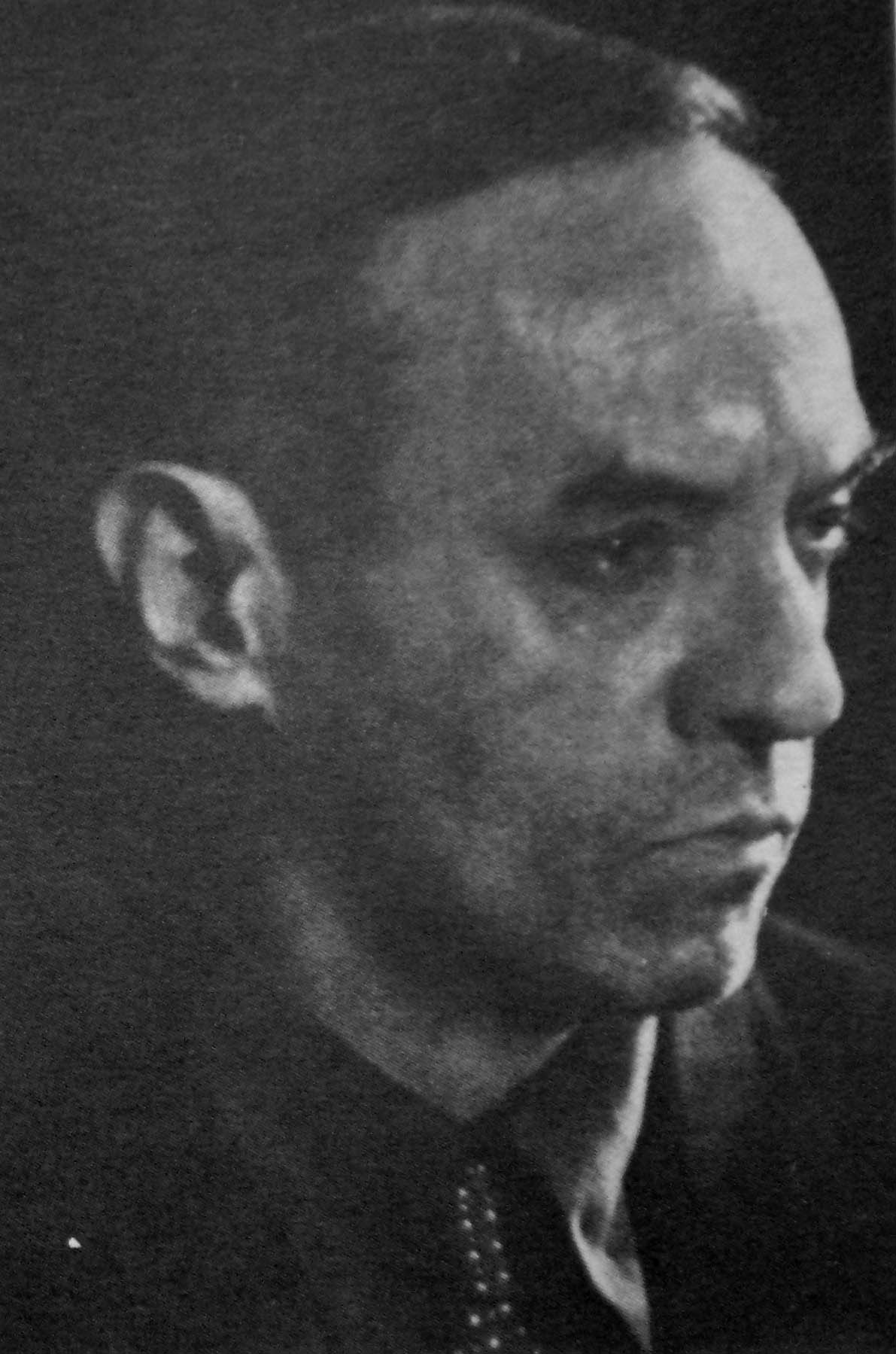
Xul Solar: Painter, Mystic, and Re-Inventor
Born Oscar Agustín Alejandro Schulz Solari in San Fernando near Buenos Aires in 1887, Xul Solar lived in a state of perpetual intellectual invention. In 1912, he set off for Europe, intending to travel onward to a Tibetan monastery, only to disembark in London and spend the next twelve years moving between Italy, France, Germany, and Britain. It was in Florence in 1916 that he adopted the name ‘Xul Solar’ – a phonetic simplification of Schulz Solari, and at the same time a clever inversion of the Latin lux (light), signaling his self-understanding as a spiritual visionary.
During his European years, Xul absorbed the full spectrum of the classical avant-garde. In 1912, he acquired a copy of Der Blaue Reiter almanac in Turin; in 1921, he enrolled at the progressive Debschitz School in Munich. When he returned to Buenos Aires in 1924 alongside his friend, the Cubist painter Emilio Pettoruti, he immediately joined the avant-garde literary circle around the journal Martín Fierro and struck up a close friendship with Jorge Luis Borges. Borges later described him as one of the most original minds Argentina had ever produced. Beyond painting small-format watercolours and temperas, Xul invented two artificial languages (Neocriollo and Panlingua), redesigned the piano keyboard with coloured keys corresponding to synesthetic tones, and created Panajedrez – an astrological version of chess that generated words, musical chords, and visual constellations as the game progressed.
Spiritual Journeys Through Imaginary Landscapes
While Xul Solar’s fantastical cityscapes of the 1920s and his late ‘verbal paintings’ (grafías plastiútiles) have often attracted scholarly attention, his landscape series from 1931 to 1954 had largely been overlooked. Yet it is precisely in these landscapes that his artistic method and spiritual worldview converge most clearly. Across roughly two decades, Xul created four distinct stylistic groups of landscapes – ranging from crystalline, floating clusters of geometric planes in the early 1930s (Paisaje, 1932), through dark, vertiginous architectural labyrinths during the Second World War (Muros y escaleras, 1944), to luminous, translucent mountain ranges in the late 1940s (Montes de nueve torres, 1948, and Sierras, 1948/49).
Beneath their shifting moods, these works share a remarkably consistent iconographic language. Tiny human figures – often carrying pilgrim staffs – climb impossibly steep staircases, narrow wall ridges, or winding mountain paths. Much like the baroque Christian emblems of the world as a labyrinth, these figures are engaged in a perilous spiritual search. Again and again, Xul combines jagged peaks, tower-like structures, and dark rectangular cave openings. In alchemical symbolism, the mountain and its interior caves represent the place where base matter slowly matures into gold, while the tower mirrors the alchemist’s protective furnace (athanor). For Xul, this transformation was inward and ethical: a retreat from a purely materialistic world toward spiritual purification.
Utopian Idealism and Turning European Abstraction Inside Out
This inner quest was closely bound up with Xul Solar’s hopes for the outer world. Steeped in Pan-American idealism, he believed that Latin America – freed from the exhaustion of Old-World Europe – could give rise to a spiritually renewed society. His landscapes reflect the changing fortunes of that utopian vision. When his optimism faltered under the shadow of the Second World War, his palettes darkened into austere greys and ochres, and the pilgrim’s path seemed fraught with existential peril. When hope returned in the late 1940s, the mountains dissolved into radiant, transparent washes of colour, suggesting a harmonious sphere beyond purely material constraints.
To construct these visionary worlds, Xul drew freely on the formal discoveries of European modernism – from Kasimir Malevich’s floating Suprematist planes, Juan Gris’s translucent Synthetic Cubist overlaps, and Giorgio de Chirico’s unsettling perspectives to Robert Delaunay’s colour facets and Paul Klee’s poetic, reduced sign-language and mountain motifs (as seen in Klee’s Über Bergeshöhe of 1917 and Heitere Gebirgslandschaft of 1929). Yet where European abstractionists stripped away representational subject matter to let pure form and colour speak for themselves, Xul reversed their pictorial logic: he took non-objective geometric forms and re-materialised them into tangible mountains, walls, steps, and sacred architecture, executing them with near-architectural precision so that personal gesture stepped back behind the clarity of a spiritual vision.
Xul Solar in Rotterdam Today: Live the Surreal
How timely Xul Solar’s visionary refusal to accept reality at face value remains is highlighted by a major exhibition currently on view at the Wereldmuseum Rotterdam: Live the Surreal: Dreaming of Another World (18 September 2026 – 28 August 2027). Exploring Surrealism not merely as a historical European movement of the 1920s, but as a global artistic stance of resistance and imagination in the face of war, oppression, and social upheaval, the exhibition features Xul Solar prominently alongside international peers.
Fittingly, the exhibition’s press release opens with one of Xul Solar’s architectural landscapes on loan from the Museo Xul Solar – Fundación Pan Klub: Rúa ruini (Ruinas), painted in 1949. Although I did not examine this specific work in my thesis, it resonates deeply with the core themes of my study. Its jagged, ruined walls – inscribed with the dates ‘1939 1945’ alongside religious and political emblems, ladders, and isolated figures beneath a starry sky – capture Xul’s confrontation with the devastation of the Second World War and his enduring search for spiritual renewal in its aftermath. Anyone able to visit Rotterdam over the coming months can experience the work in person; further details on the exhibition are available on the Wereldmuseum Rotterdam website: https://rotterdam.wereldmuseum.nl/en/about-wereldmuseum-rotterdam/press/press-releases/live-surreal-dreaming-another-world.
Read the Full Thesis in Open Access
If you are curious to explore Xul Solar’s visual worlds, his ties to Jorge Luis Borges, or his place within the Latin American avant-garde in greater depth, you can now read and download the complete thesis (in German, with an English abstract, detailed catalogue of works, and archival bibliography) free of charge via Heidelberg University Library:
Louisa Gienger, Visionen einer Neuen Welt. Xul Solars Landschaften von 1931–1954 (Master thesis, University of Regensburg, 2003; Open Access digital edition, ART-DOK / arthistoricum.net, 2026): https://archiv.ub.uni-heidelberg.de/artdok/10299/