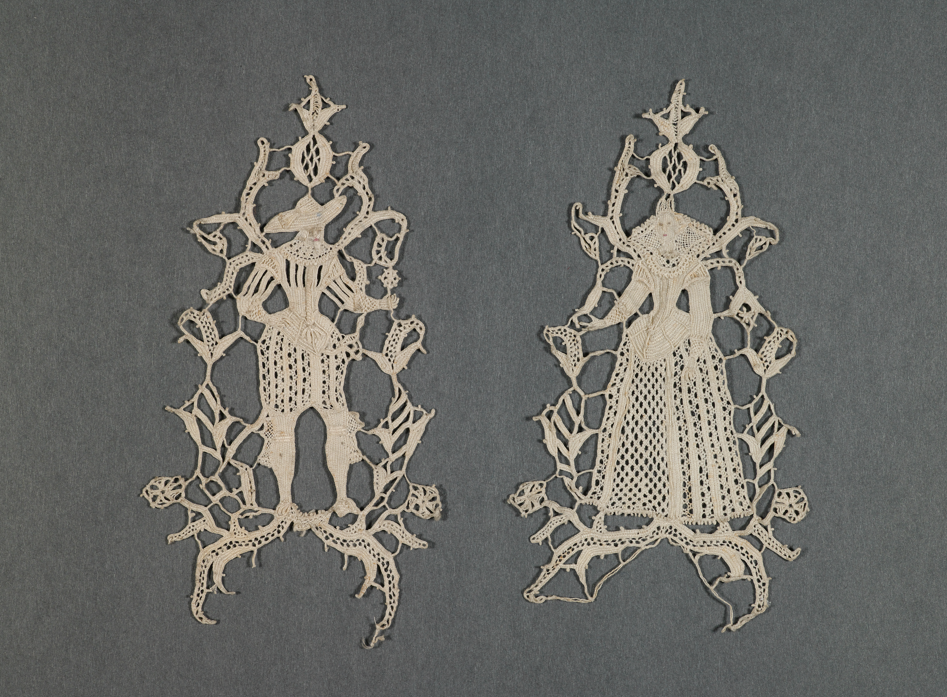
Figurative needle lace panels (punto in aria) depicting a gentleman and a lady, attributed to Jungfrau Pickelmann, southern Germany (Nuremberg?), c. 1600–1620. Germanisches Nationalmuseum, Nuremberg, inv. nos. Gew 3028 and Gew 3029. Photo: GNM.
Selective Antiquity: The 19th-Century Taste for Heavy Guipure and Early Lace in Museum Collections
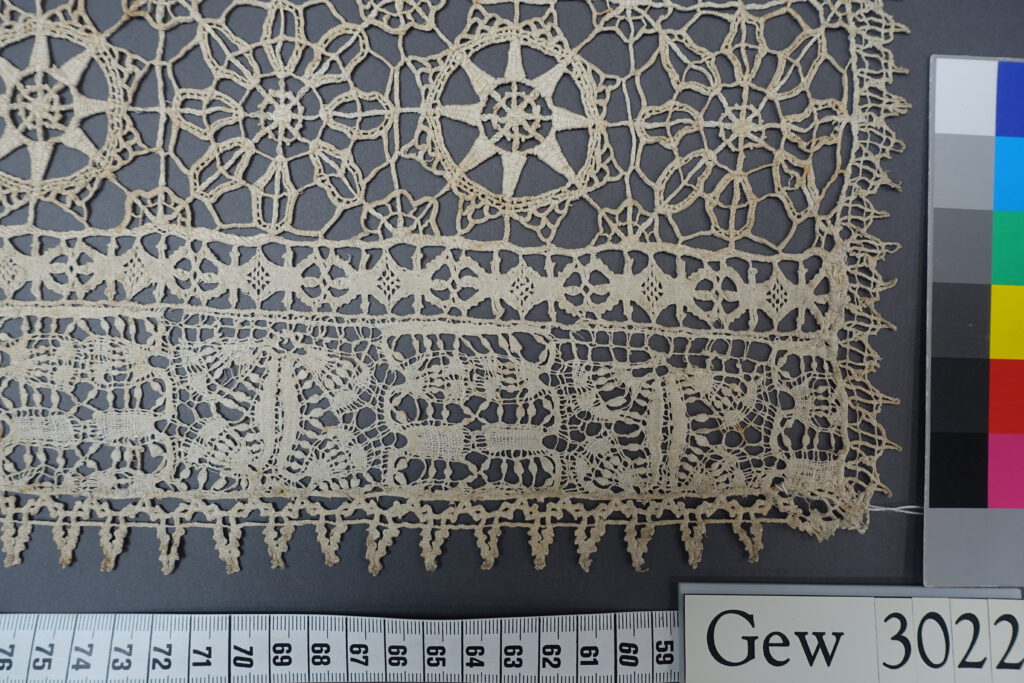
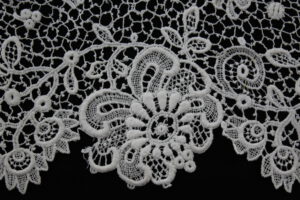
Browsing through the lace holdings at the Germanisches Nationalmuseum (GNM) in Nuremberg, one quickly encounters an unexpected curatorial landscape. Rather than an unbroken historical timeline, the collection reveals a decided preference. The gossamer-fine mesh laces of the eighteenth century, so central to Rococo fashion and so eagerly sought by collectors today, are virtually absent. Instead, the drawers are dominated by substantial, sculptural pieces: heavy guipure laces and geometric openwork from the late sixteenth and seventeenth centuries.
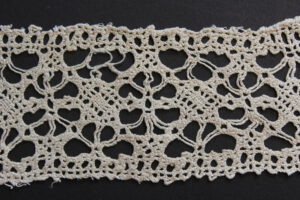
Detail of a linen border featuring early needle lace (reticella) and bobbin lace, late 16th century. Germanisches Nationalmuseum, Nuremberg, inv. no. Gew 3022. Photo: GNM.
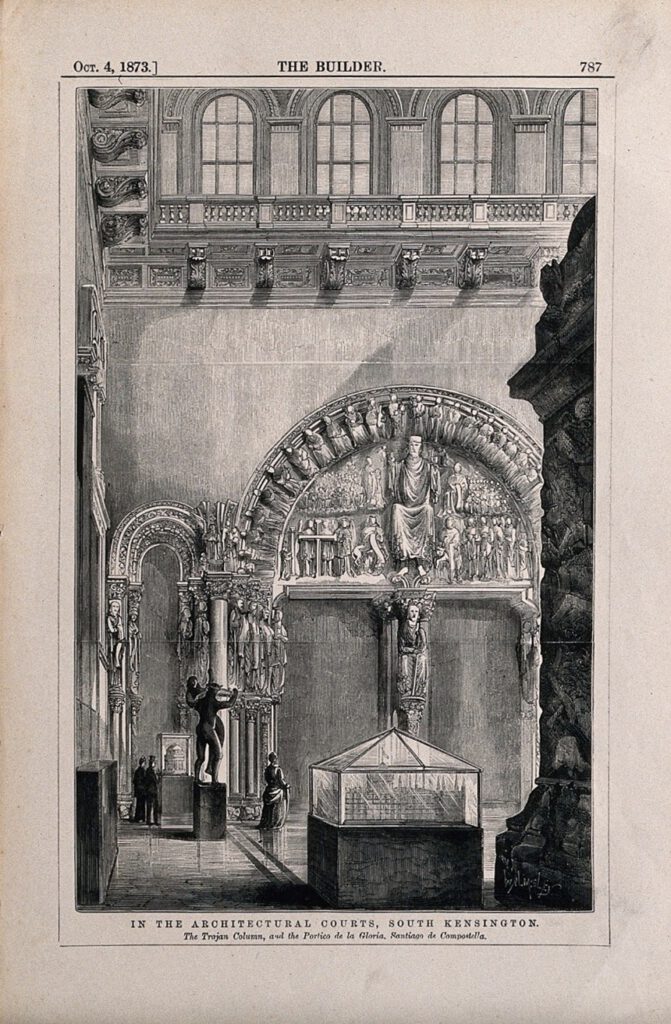
This composition is far from accidental; it reflects the founding philosophy and acquisition strategies of nineteenth-century decorative arts museums. In an era shaped by industrialisation, institutions like the South Kensington Museum in London and the Germanisches Nationalmuseum in Nuremberg did not collect lace primarily for its rarity, monetary value, or aristocratic provenance. Instead, their mission was didactic and reform-minded. Historical textiles were acquired as pedagogical tools to cultivate public taste, educate art historians, and provide direct material inspiration for contemporary industrial design, textile schools, and female domestic needlework.
Didactic display of historical ornament and craftsmanship: The Architectural Court at the South Kensington Museum (now Victoria and Albert Museum), wood engraving, 1873.
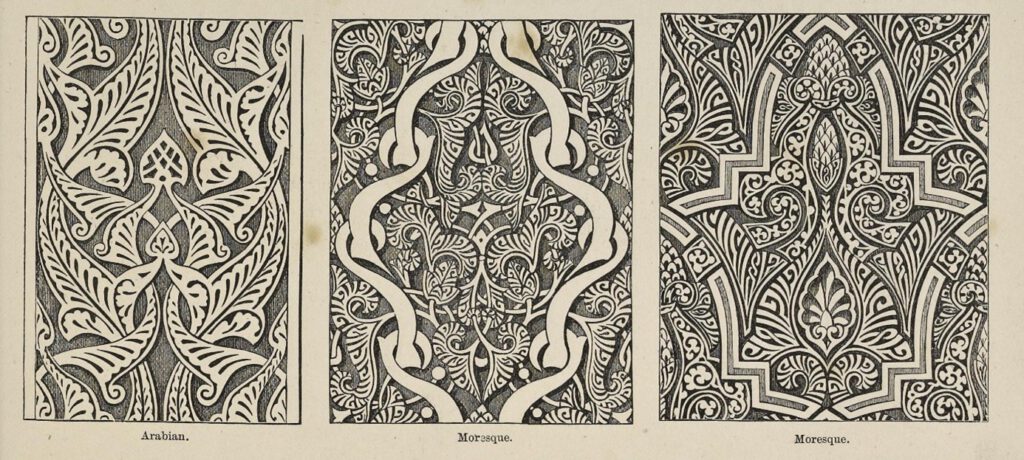
From this didactic perspective, the airy, net-ground laces of the eighteenth century offered little practical value. Theoretical reformers like Owen Jones and Christopher Dresser argued passionately against spatial illusionism, three-dimensional shading, and excessive naturalism in the decorative arts. Instead, they championed flat pattern design, structural clarity, and the harmonious balance of positive and negative space. Late Renaissance and early Baroque laces perfectly embodied these principles: their pronounced contours, geometric reticella grids, and stylised botanical ornaments presented a masterclass in surface decoration that could easily be transcribed into modern design curricula.
Geometric abstraction and surface decoration: Chromolithographic study plate from Owen Jones, The Grammar of Ornament, demonstrating the 19th-century focus on flat pattern design.
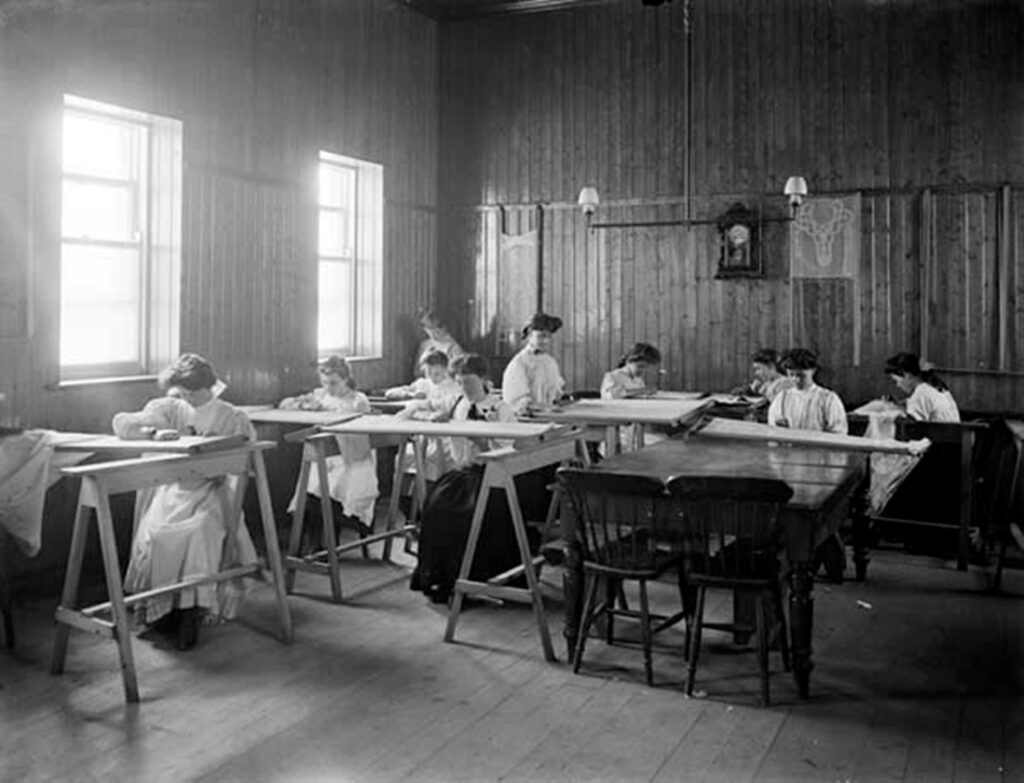
Furthermore, these robust historical laces resonated deeply with the social ethos of the nineteenth-century lace revival. Influenced by the Arts and Crafts philosophy of John Ruskin and William Morris, reformers championed a return to honest handwork and genuine materials as a remedy for industrial degradation. The heavy guipures and needle laces offered ideal models for modern workshops and cottage industries, from the presentation convents in Ireland to embroidery guilds across Europe. As contemporary lace workers adapted these bold seventeenth-century structures into modern collars, trims, and ecclesiastical vestments, the museum collections in Nuremberg and South Kensington functioned not as static mausoleums of luxury, but as living design laboratories.
Lacemaking class at the Presentation Convent, Youghal, Ireland, c. 1900–1910. Photo: Poole Photographic Collection, National Library of Ireland (Public domain).
Cover illustration: Pair of figurative needle lace panels (punto in aria) showing a courtly couple in contemporary dress framed by floral scrollwork, attributed to Jungfrau Pickelmann, southern Germany (Nuremberg?), c. 1610–1625. Germanisches Nationalmuseum, Nuremberg, inv. nos. Gew 3028 (lady) and Gew 3029 (gentleman). Photo: GNM.